EN
UA


Since the company’s founding 20 years ago, DTEK has grown into a national energy leader. Today we are transforming into a pan-European clean energy business.


Our businesses generate electricity at wind, solar and thermal power plants, distribute and supply electricity to end consumers, extract natural gas and mine coal, trade energy resources on Ukrainian and foreign markets, and provide domestic and commercial energy services.
.png_230_orig_resized_500_280_2.webp)
The green transition is profoundly transforming the global energy landscape, and DTEK is embracing this revolution.

DTEK is investing heavily in implementing innovative technologies, establishing new businesses, shaping new capacities, and enhancing the production process.

The latest company updates, press releases, and news, alongside expert insights from DTEK’s leadership.

A career at DTEK means playing an integral role in driving innovative changes and developments in Ukraine’s energy sector.

Europe can replace its lost Russian energy supply with this surprising partner – Maxim Timchenko’s op-ed for WEF
26 May 2022, Ukraine
Copy link
Copied!

Subscribe to our news

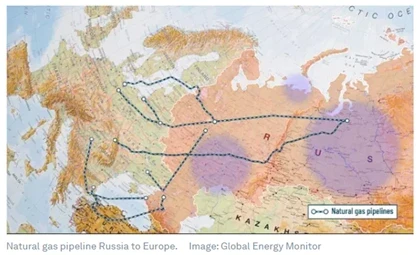
Europe can replace its lost Russian energy supply with this surprising partner – Maxim Timchenko’s op-ed for WEF
Copy link
Copied!
Subscribe to our news
Maxim Timchenko, Chief Executive Officer, DTEK
This article is part of the World Economic Forum Annual Meeting
- Russia’s halting of its gas supply to the EU is creating energy insecurity for the bloc in a situation where there has been an over-reliance on the Russian gas supply.
- While Russia has seller power, Europe has greater buyer power as 71% of Russia’s exports are in the EU, and gas pipelines take years to build.
- Ukraine can contribute to a transition period of replacing energy resources from Russia. It can then become a reliable partner in the energy security structure of Europe.
The Kremlin’s threat to the EU of stopping its gas supply should it not pay in rubles was more than just hot air. In April 2022, it followed through on its promise, cutting off natural gas supplies to Poland and Bulgaria, dramatically escalating its response to Western sanctions imposed on Moscow over the war in Ukraine. Even at the height of the Cold War, Moscow has never cut off its gas supply to Europe.
Over-dependency
Since the Cold War, dependence on energy sources has increased and globalization has led to a greater reliance on exported supplies. These two factors require those importing sources to apply caution when it comes to energy security when its place in Europe’s security system has never been more critical.
Forty years ago, the United States Central Intelligence Agency warned the White House that the 3,500-mile gas pipeline from Siberia to Germany was a direct threat to the future of Western Europe, creating a dangerous over-dependence on Russian fuel. President Reagan opposed the pipeline but lost out to lobbying interests which the New York Times summarized as “advocating for business interests over national security, human rights or environmental concerns.”
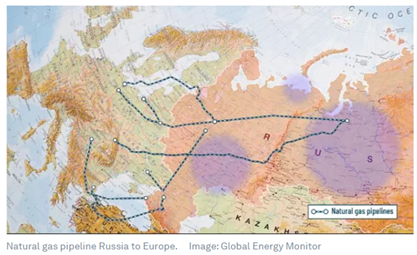
At the beginning of the full-scale invasion of Ukraine, Russia exported €63 billion worth of fossil fuels through offshore supplies and pipelines. An estimated €44 billion, 71% of the total amount, is in the EU,
according to the Finnish Center for Energy and Clean Air Research. That is a dozen times more than EU aid to Ukraine.
While Russia has seller power, Europe needs to realize that the EU has even greater buyer power. Gas pipelines take years to build and unlike oil or coal, gas cannot just be loaded onto a ship and sold to any global buyer.
It’s time to act. As a result of short-sighted politics, Europe has fallen into a trap and has nurtured a Russian military machine that destroys Ukrainians. However, this is a question not only of Ukraine but also of other countries neighbouring Russia that could be next.
Long-term vision for energy security
Of course, action must be well-thought-out. Due to lengthy and consistent decisions, Europe has become dependent on Russia’s energy resources. Therefore, decisions to redesign Europe’s energy security must also be considered and consider the long-term consequences, not only for the EU but also for neighbouring countries, particularly Ukraine.
Moreover, Ukraine can contribute to the transition period while replacing energy resources from Russia. It can then become a reliable partner in the energy security structure of Europe for the following reasons:
- Ukraine’s energy sector has surprised the world with its stability amid war. On the first day of the conflict, Ukraine’s energy system was disconnected from Russia, unlikely to be connected again. Ukraine is now synchronized with the European electricity network and will soon demonstrate it can be a key driver of the European Green Deal.
- More than 55% of Ukraine’s electricity is produced by nuclear power plants, which is clean energy. Additionally, Ukraine can produce 9 GWT from wind and solar farms. The potential of new renewables capacity is more than 20 GW.
- Ukraine’s green European electricity integration will be realized with the help of our international business partners, with whom DTEK plans to work on various decarbonization and technological projects (renewables, hydrogen, battery storage, Small Modular Reactors, etc.).
- After Norway, Ukraine has the largest gas deposits in Europe. In addition, the use of Ukraine’s underground natural gas storage facilities will allow the implementation of EU plans to form a strategic gas reserve.
Ukraine is ready to take the lead, be a reliable partner, ensure its green electricity supply and export to Europe and actively develop clean technologies. Doing so will help Europe and the whole world protect the values of humanity, democracy and security and correct the mistake of ignoring US President Reagan’s fears, which are tragically coming true every day in Russia’s war against Ukraine.


DTEK Group is the largest private investor in Ukraine’s energy sector, with 55,000 employees and over €12 billion of capital invested since 2005.
Our businesses generate electricity at wind, solar and thermal power plants; distribute and supply power to end consumers; extract natural gas and coal; trade energy resources on Ukrainian and foreign markets; and provide domestic and commercial energy services.
Over the last 20 years, DTEK has grown into a national energy leader and is today transforming into a pan-European clean energy business.
Since the full-scale invasion of Ukraine in 2022, DTEK Group has restored power to millions of consumers across regions affected by hostilities.
DTEK Group is 100% owned by SCM Holdings. The ultimate beneficiary and sole shareholder is Rinat Akhmetov, a businessman and philanthropist.
All news
All news

20 October 2026
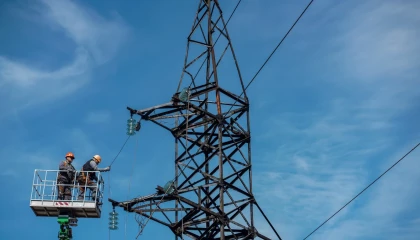
Five DTEK facilities hit in one day as russian attacks target power distribution ...
16 October 2026
DTEK energy facility in Odesa region damaged in overnight russian attack
12 October 2026
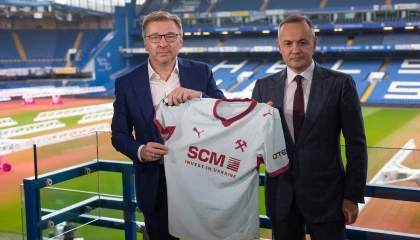
DTEK and Shakhtar launch Champions League campaign to drive investment in Ukraine
09 October 2026
russian drones hit two DTEK power sites in eastern Ukraine within 10 hours
09 October 2026
DTEK Group | 2026 September highlights
02 October 2026
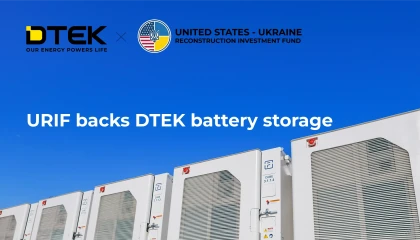
US-backed investment fund introduces financing for DTEK’s landmark battery ...

