EN
UA


Since the company’s founding 20 years ago, DTEK has grown into a national energy leader. Today we are transforming into a pan-European clean energy business.


Our businesses generate electricity at wind, solar and thermal power plants, distribute and supply electricity to end consumers, extract natural gas and mine coal, trade energy resources on Ukrainian and foreign markets, and provide domestic and commercial energy services.
.png_230_orig_resized_500_280_2.webp)
The green transition is profoundly transforming the global energy landscape, and DTEK is embracing this revolution.

DTEK is investing heavily in implementing innovative technologies, establishing new businesses, shaping new capacities, and enhancing the production process.

The latest company updates, press releases, and news, alongside expert insights from DTEK’s leadership.

A career at DTEK means playing an integral role in driving innovative changes and developments in Ukraine’s energy sector.

DTEK launches Energy Transition Plan to support Ukraine’s energy security and decarbonisation goals
23 June 2026, Ukraine
Copy link
Copied!

Subscribe to our news

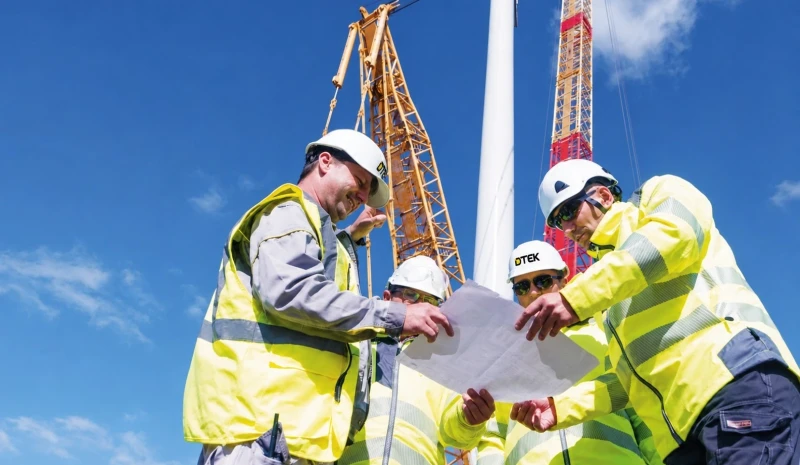
DTEK launches Energy Transition Plan to support Ukraine’s energy security and decarbonisation goals
Copy link
Copied!
Subscribe to our news
DTEK, Ukraine's largest private energy company, today published its first Energy Transition Plan, setting out how Ukraine can build a more secure, resilient and lower-carbon energy system while supporting the country’s long-term recovery and integration with Europe.
The publication comes in the same week as London Climate Action Week and ahead of the Ukraine Recovery Conference (URC) in Gdansk, where governments, investors and businesses will discuss the partnerships and investment needed to support Ukraine’s reconstruction. DTEK emphasises that rebuilding the country’s energy system presents an opportunity to strengthen both energy security and long-term competitiveness through investment in modern, resilient and lower-carbon infrastructure.
russia’s full-scale invasion and repeated attacks on energy infrastructure have demonstrated the importance of a more flexible, decentralised and resilient energy system in Ukraine. The war has shown that energy security depends not only on generating enough power, but on building a system that can better withstand disruption and recover more quickly. Renewable energy, battery storage and other distributed energy solutions have an important role to play in strengthening resilience while supporting Ukraine’s long-term decarbonisation.
Developed against this backdrop, DTEK’s Energy Transition Plan recognises the unique challenges of operating in a country at war, the immediate needs of Ukraine’s energy system and support for Europe’s green agenda.
The Plan outlines how DTEK will contribute to Ukraine’s energy transformation through four strategic priorities: fulfilling our obligation to Ukraine’s coal transition, scaling investment in renewables, modernising electricity networks and deploying lower-carbon solutions that can strengthen both energy security and decarbonisation.
It also sets out a pathway that aligns with Ukraine’s national climate and energy objectives. The Plan will result in emissions reductions of 42% in scope 1 and 2 emissions and 25% in scope 3 emissions by 2035, putting DTEK on track to achieve net zero by 2050.
DTEK Chief Sustainability Officer, Jeff Oatham, said:
"One of the most important questions facing Ukraine’s reconstruction is how to balance the need for energy security and energy transition. At DTEK, we believe that the two are mutually reinforcing. The energy system we rebuild must be more resilient, more flexible and better able to withstand future shocks. At the same time, it must support Ukraine’s long-term decarbonisation ambitions and integration with Europe. Our Energy Transition Plan sets out how DTEK intends to help deliver that future."
Since the start of the full-scale invasion, DTEK has invested €2.4 billion in Ukraine, including in renewable energy, battery storage, grid modernisation and energy restoration. Continued private investment and international partnerships will be critical to building a more secure, resilient and sustainable energy system for Ukraine and Europe.
Alongside the Energy Transition Plan, DTEK also published its latest Sustainability Report, detailing the company's environmental, social and governance performance and its contribution to maintaining critical energy services throughout the war.


DTEK Group is the largest private investor in Ukraine’s energy sector, with 55,000 employees and over €12 billion of capital invested since 2005.
Our businesses generate electricity at wind, solar and thermal power plants; distribute and supply power to end consumers; extract natural gas and coal; trade energy resources on Ukrainian and foreign markets; and provide domestic and commercial energy services.
Over the last 20 years, DTEK has grown into a national energy leader and is today transforming into a pan-European clean energy business.
Since the full-scale invasion of Ukraine in 2022, DTEK Group has restored power to millions of consumers across regions affected by hostilities.
DTEK Group is 100% owned by SCM Holdings. The ultimate beneficiary and sole shareholder is Rinat Akhmetov, a businessman and philanthropist.
All news
All news

02 October 2026
US-backed investment fund introduces financing for DTEK’s landmark battery ...
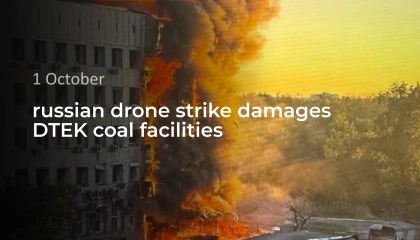
01 October 2026
russian drone strike damages DTEK coal facilities in Dnipropetrovsk region, ...
28 September 2026
Why compliance matters as DTEK grows internationally
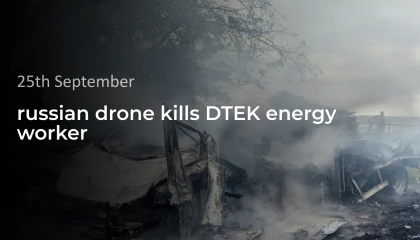
25 September 2026
russian drone kills DTEK energy worker in Odesa region
16 September 2026
United States DFC approves a landmark financing for DTEK’s battery storage ...
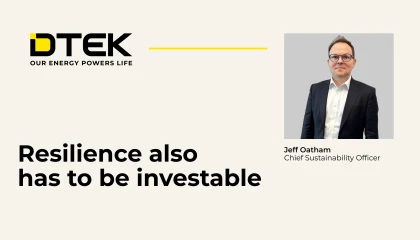
15 September 2026
What Ukraine's energy system can teach the world about resilience: DTEK CSO Jeff ...

