EN
UA


Since the company’s founding 20 years ago, DTEK has grown into a national energy leader. Today we are transforming into a pan-European clean energy business.


Our businesses generate electricity at wind, solar and thermal power plants, distribute and supply electricity to end consumers, extract natural gas and mine coal, trade energy resources on Ukrainian and foreign markets, and provide domestic and commercial energy services.
.png_230_orig_resized_500_280_2.webp)
The green transition is profoundly transforming the global energy landscape, and DTEK is embracing this revolution.

DTEK is investing heavily in implementing innovative technologies, establishing new businesses, shaping new capacities, and enhancing the production process.

The latest company updates, press releases, and news, alongside expert insights from DTEK’s leadership.

A career at DTEK means playing an integral role in driving innovative changes and developments in Ukraine’s energy sector.

Energy Transition Plan
Our unique context
DTEK operates in conditions unlike almost any other energy company. We are working in a country where energy infrastructure is deliberately targeted by russia, and our assets remain under almost continuous attack.
This reality shapes every aspect of our strategy. Our Energy Transition Plan is built in recognition of this context and is designed around the following factors:
- The condition of our assets
- The stability and needs of Ukraine’s energy system
- The national regulatory and policy framework
- The security environment and related guarantees
As the situation evolves, we continuously assess the impact on these conditions and will review and update our Energy Transition Plan should any material changes occur.
Our emissions footprint
We recognise that our operations currently generate significant greenhouse gas emissions.
Understanding exactly where these emissions arise enables us to decarbonise more effectively.
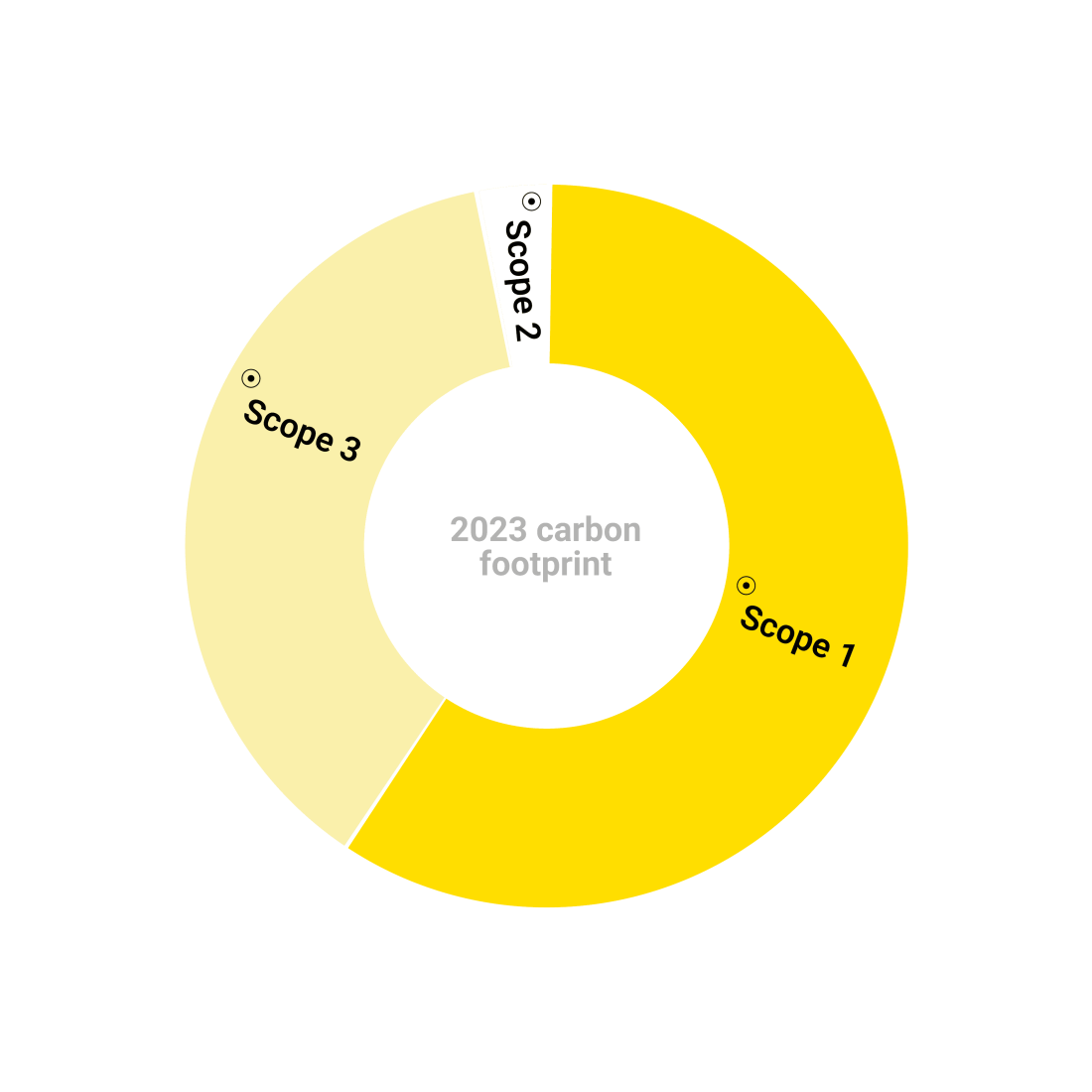
In 2024, we undertook our first Group-wide greenhouse gas inventory, calculating emissions across Scope 1 (direct), Scope 2 (indirect) and Scope 3 (value chain) emissions, setting 2023 as our baseline year.
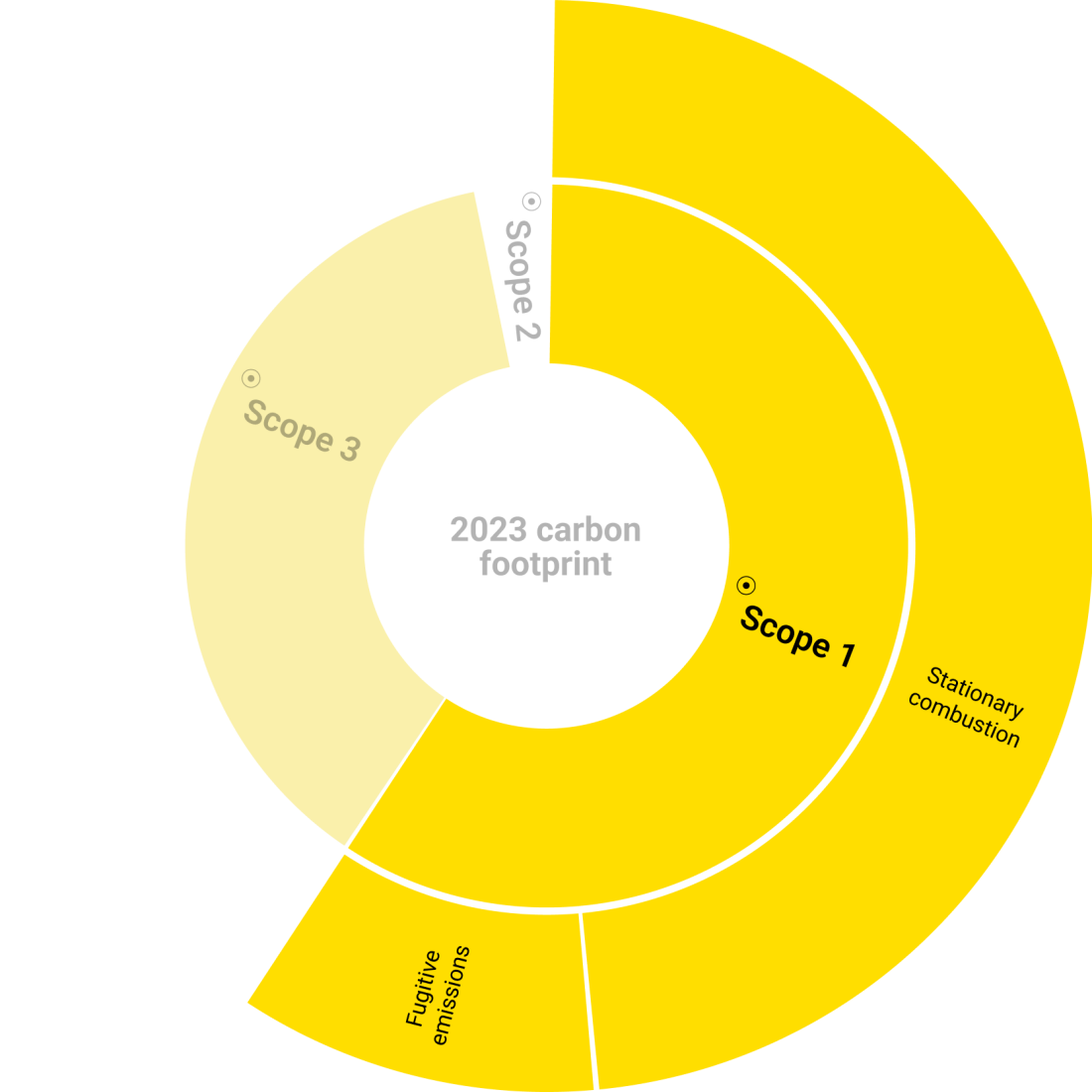
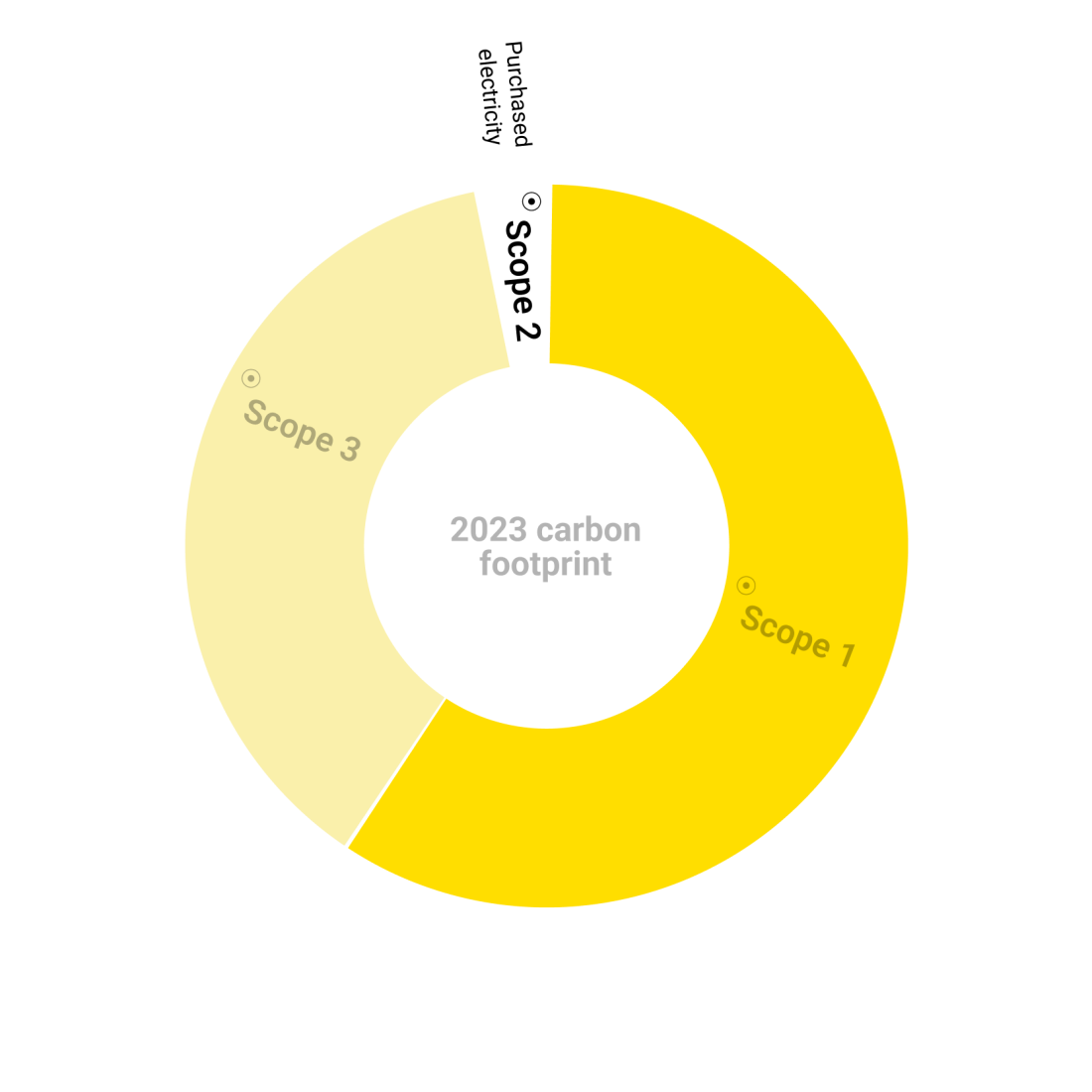
This graph shows the carbon hotspots within our footprint, which guide the action taken under our Energy Transition Plan.
Scope 1 – Stationary combustion: burning coal for power generation
Scope 1 – Fugitive emissions: methane leaks during coal mining
Scope 2 – Purchased electricity and heat: losses during electricity transmission and distribution
Scope 3 – Fuel and energy related activities: the purchase and sale of electricity to end users
Scope 3 – Use of sold products: combustion of fuel produced and sold to end users
Scope 3 – Purchased goods and services: upstream emissions from the production of products we buy
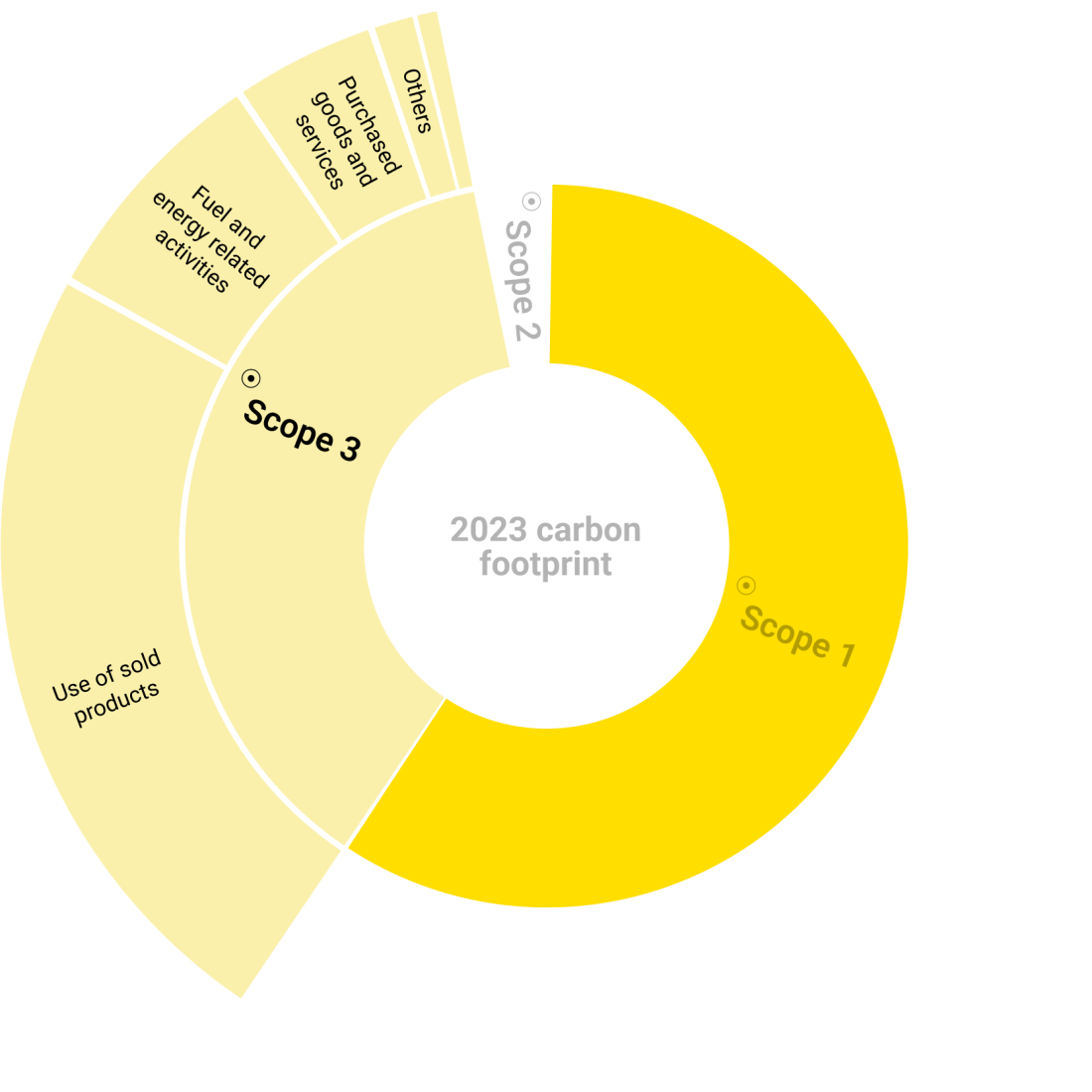
Reporting boundary: includes all operations and activities
Our emissions targets
DTEK has set absolute emissions targets across Scope 1, 2, and 3, covering both the near-term and the long-term.
By 2035 (near-term targets)
- Scope 1, and 2 (operational emissions): reduce by 42% from a 2023 baseline
- Scope 3 (value chain emissions): reduce by 25% from a 2023 baseline
By 2050 (long-term targets)
- Scope 1, 2, and 3:
reduce by 90% from a 2023 baseline
Target boundary: core operations excluding trading activities
Our targets have been developed using Science Based Targets initiative (SBTi) guidance and are designed to support the goals of the Paris Agreement, ensuring they are grounded in climate science and consistent with recognised international best practice.
These targets are embedded within our Energy Transition Plan. They set clear expectations and enable transparent tracking of progress and help us prioritise actions across the Group.
Decarbonisation priorities
To deliver our emissions reduction targets, we are focusing on four priority areas that guide our decarbonisation efforts across the Group:
Phasing down coal
Delivering a responsible and managed closure of thermal power plants and mines, aligned with our Coal Policy and the needs of Ukraine’s energy system.
Scaling renewables
Continue to expand wind and solar generation, as the largest investor in renewables in Ukraine.
Modernising and strengthening the grid
Delivering a responsible and managed closure of thermal power plants and mines, aligned with our Coal Policy and the needs of Ukraine’s energy system.
Deploying low carbon technologies
Scaling other technologies such as battery storage, smart metering and customerside solutions to cut emissions, improve system flexibility and prepare for future energy needs.
Together, these actions form a practical roadmap for reducing emissions while maintaining system stability and supporting longterm growth.
Coal Policy
Coal phase-out is a central pillar of DTEK’s energy transition. We are committed to a managed and responsible exit from coal, recognising the social, economic and energy security implications for Ukraine. Our timeline reflects Ukraine’s national commitment to phase out coal power generation by 2035.
Under our Coal Policy, DTEK commits to:
- Progressively retire thermal power units with full closure by the end of 2035.
- Reduce thermal coal production to zero by the end of 2035.
- No investment or expansion of coal-based operations beyond repair and maintenance.
- Increase investment in renewable energy, expanding our portfolio of green assets in Ukraine.

