
 Back to list
What is a wind turbine?
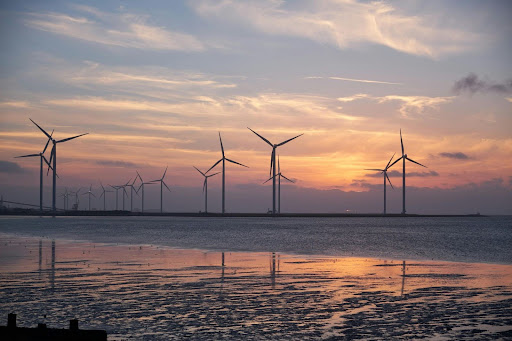
Wind is one of the most abundant natural resources on the planet. While the power of airflow varies depending on the area, it is already effectively captured by wind energy turbines and converted into electricity.
Understanding wind energy turbines
The airflow changes because of how the Earth is heated by the sun. This allows us to use technology such as a wind power turbine to advance decarbonisation and take advantage of the relevant kinetic energy. The most commonly used turbines feature three blades rotating on a horizontal axis, which provides an optimal balance of efficiency, cost, and reliability for most applications..
How does a wind turbine work?
When you come across turbines on the outskirts of the town, they are all situated in the same position. These massive towers often move towards the flow of the air for maximum effectiveness and capture accuracy thanks to their aerodynamic profile. Then, the blades turn by the airflow, spinning the rotor that generates power.
Advantages and disadvantages of using wind turbines
There are many advantages of using wind turbines, including that the energy produced by the airflow is completely carbon-free. Turbines allow companies to take part in the emissions trading initiative, promoting sustainable production. Airflow is also an abundant resource, meaning that it is renewable and will never get used up.
We also have to acknowledge their negative effects. In some cases, they can endanger wildlife as birds and bats collide with the towers. When placed near homes and wilderness, they can be noisy.
Interesting facts about wind turbines
Exploring the topic of airflow energy, you might be tempted to look up facts, such as “how tall is a wind turbine”. Here is some interesting data:
- Smaller modern turbines can be easily used by households when connected to the microgrid – they are fully operational and can power a small community.
- Wind turbine blade lengths typically range from 36 to 85 meters, with longer blades capturing more wind energy.
- On average, turbines of various sizes generate between 5 kW to 12 MW or more of electrical power.
These wind turbines facts showcase how impressive the range can be and how the applications vary.
DTEK's involvement in wind energy development
In Ukraine, DTEK is establishing renewables locally, including wind energy applications. In 2023, DTEK completed the first phase of the Tyligulska wind power plant (also known as Tylihulska wind farm) with 114 MW capacity and 19 Vestas turbines on the Black Sea coast.
DTEK plans a €650 million expansion of the Tyligulska wind farm, which will add 64 more turbines from Vestas. When the full project is completed, it will have a total capacity that can generate clean electricity for hundreds of thousands of households. This represents one of the largest private sector investments in Ukraine's renewable energy sector.